Dubai’s construction industry includes everything from residential villas and commercial buildings to high-rise towers, infrastructure projects, warehouses, and major renovation developments. As these projects grow or change, contractors often need to modify existing concrete structures without causing unnecessary damage.
This is where professional concrete cutting becomes essential.
Different Concrete Cutting Methods are used depending on the structure, cutting depth, concrete thickness, reinforcement, access, and purpose of the work. A method suitable for cutting a concrete floor may not be the right choice for a reinforced wall or a large structural section.
In Dubai, concrete cutting is commonly required for renovation, demolition, MEP installations, utility work, road construction, structural modifications, and new openings in existing buildings.
What Is Concrete Cutting?
Concrete cutting is the controlled process of cutting concrete using specialized equipment and diamond cutting tools. Instead of breaking concrete randomly with heavy impact tools, professional cutting allows contractors to create planned openings or sections with greater accuracy. Depending on the project, contractors may use diamond blades, core drilling machines, wall saws, floor saws, or diamond wire systems.
Concrete cutting services in Dubai can be used for:
- Concrete walls and slabs
- Floors and foundations
- Roads and pavements
- Door and window openings
- MEP penetrations
- HVAC and duct openings
- Plumbing installations
- Structural modifications
- Controlled concrete demolition
The correct cutting technique should always be selected according to the structure and project requirements.
1. Wall Sawing
Wall sawing is one of the most accurate methods for cutting concrete walls. The equipment uses a diamond blade mounted on a track, allowing the blade to travel along a predetermined cutting line. This method is particularly useful when a contractor needs to create a large, straight opening in a concrete wall.
Common applications in Dubai include:
- Door openings
- Window openings
- Lift and access openings
- HVAC openings
- MEP installations
- Structural wall modifications
- Controlled removal of wall sections
Wall sawing can be especially useful in Dubai renovation projects where an existing concrete wall needs to be modified while keeping the surrounding structure as controlled as possible. For reinforced concrete walls, the cutting equipment and diamond blade should be selected according to the thickness and reinforcement present in the structure.
2. Floor Sawing and Slab Cutting
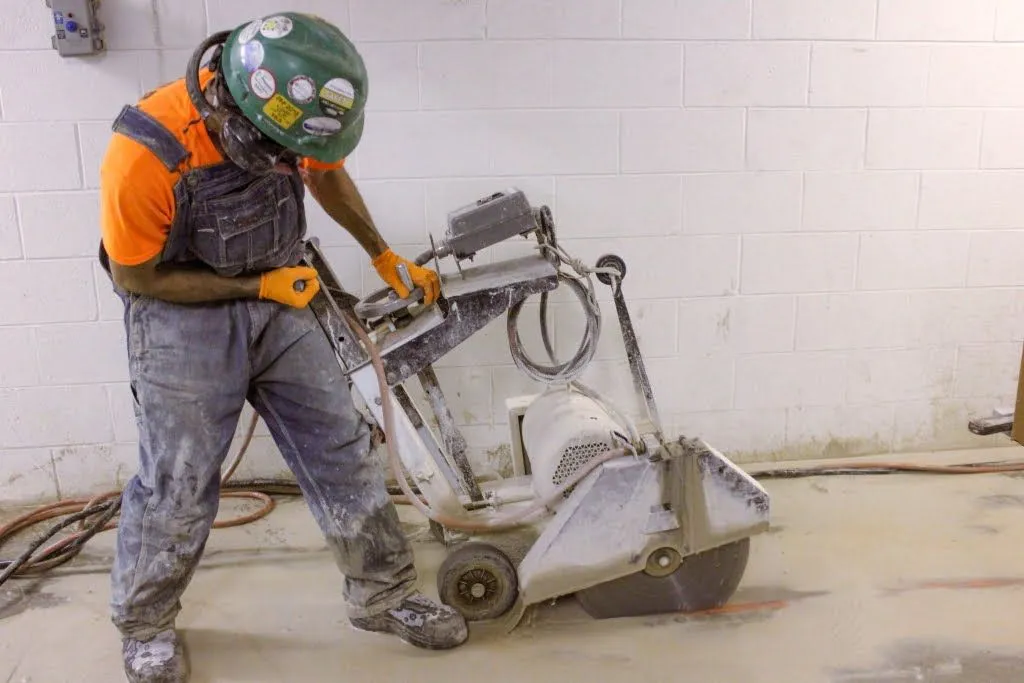
Floor sawing is designed for horizontal concrete surfaces. It is commonly used on concrete floors, slabs, parking areas, roads, and pavements. A floor saw uses a diamond blade to create a straight cut at a controlled depth. Depending on the equipment, these cuts can be relatively shallow or deep enough for specific construction and demolition requirements.
Floor sawing is commonly used for:
- Concrete slab cutting
- Floor openings
- Utility trenches
- Expansion and control joints
- Concrete repairs
- Removing damaged sections
- Preparing surfaces for MEP installations
In Dubai, slab cutting can be useful during villa renovations, commercial fit-outs, warehouse modifications, and building service installations. Before cutting an existing slab, contractors should understand the structural arrangement and identify any concealed services that could be affected.
3. Core Drilling
Core drilling creates circular holes through concrete using a hollow diamond core bit. It is different from conventional sawing because the objective is to produce a round penetration rather than a straight cut. Core drilling is widely used throughout construction because modern buildings contain extensive plumbing, electrical, HVAC, drainage, and mechanical systems.
Typical applications include:
- Pipe penetrations
- Electrical cable routes
- HVAC installations
- Drainage systems
- Plumbing work
- Anchor holes
- MEP penetrations
- Concrete wall and slab openings
For example, a contractor installing a new pipe through a concrete slab may use core drilling to create a hole with the required diameter. Before drilling, the area should be checked for concealed electrical cables, pipes, reinforcement, and post-tensioning systems where applicable. Concrete scanning may be required before drilling in sensitive areas.
4. Wire Sawing
Wire sawing is a specialized technique used for large, thick, or heavily reinforced concrete structures. Instead of a conventional circular blade, the system uses a diamond-coated wire that passes around or through the concrete section. The moving wire gradually cuts through the material.
Wire sawing can be suitable for:
- Thick reinforced concrete
- Large foundations
- Bridge structures
- Heavy structural sections
- Large slabs
- Industrial demolition
- Complex concrete removal
Wire sawing can be particularly valuable when a conventional saw cannot achieve the required cutting depth or when access makes traditional blade cutting difficult. Because wire sawing is generally used for demanding applications, the cutting sequence, structural stability, equipment setup, and removal process should be planned carefully.
5. Road Sawing
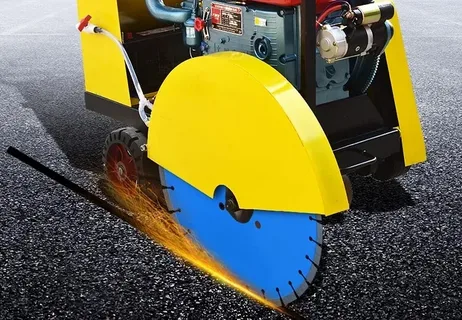
Road sawing is commonly used for concrete and asphalt surfaces. It is performed using powerful floor saws designed for outdoor construction and infrastructure work. Dubai’s ongoing road, utility, drainage, and infrastructure projects can require controlled cutting of pavement and concrete surfaces before repair or installation work.
Road sawing applications include:
- Road cutting
- Asphalt cutting
- Utility trench preparation
- Pipeline installation
- Pavement repairs
- Concrete road repairs
- Expansion and control joints
- Sectional pavement removal
The correct diamond blade should be selected according to the surface material and cutting requirements. Concrete and asphalt have different characteristics, so using the appropriate equipment can improve cutting performance and reduce unnecessary wear.
6. Ring Sawing
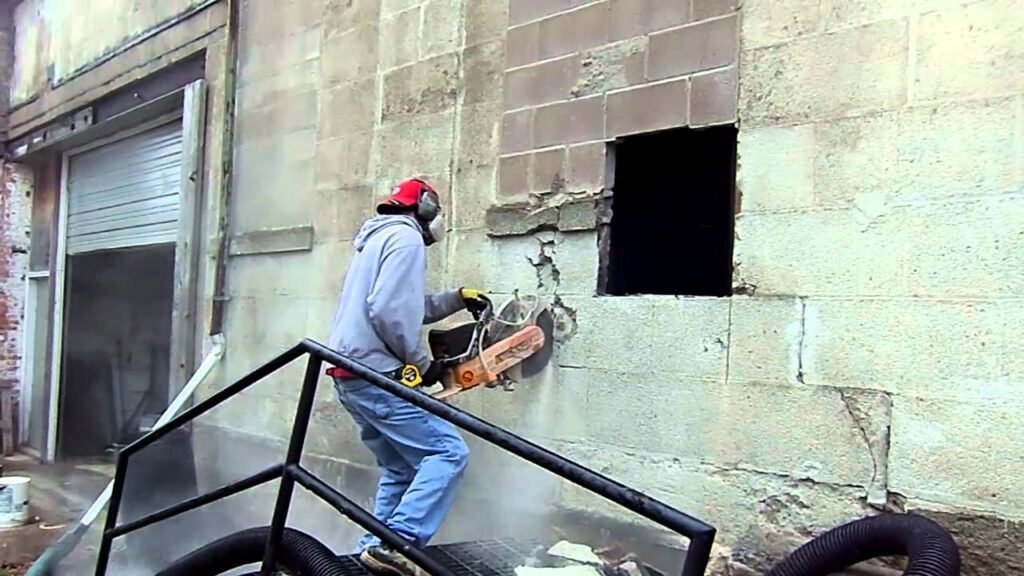
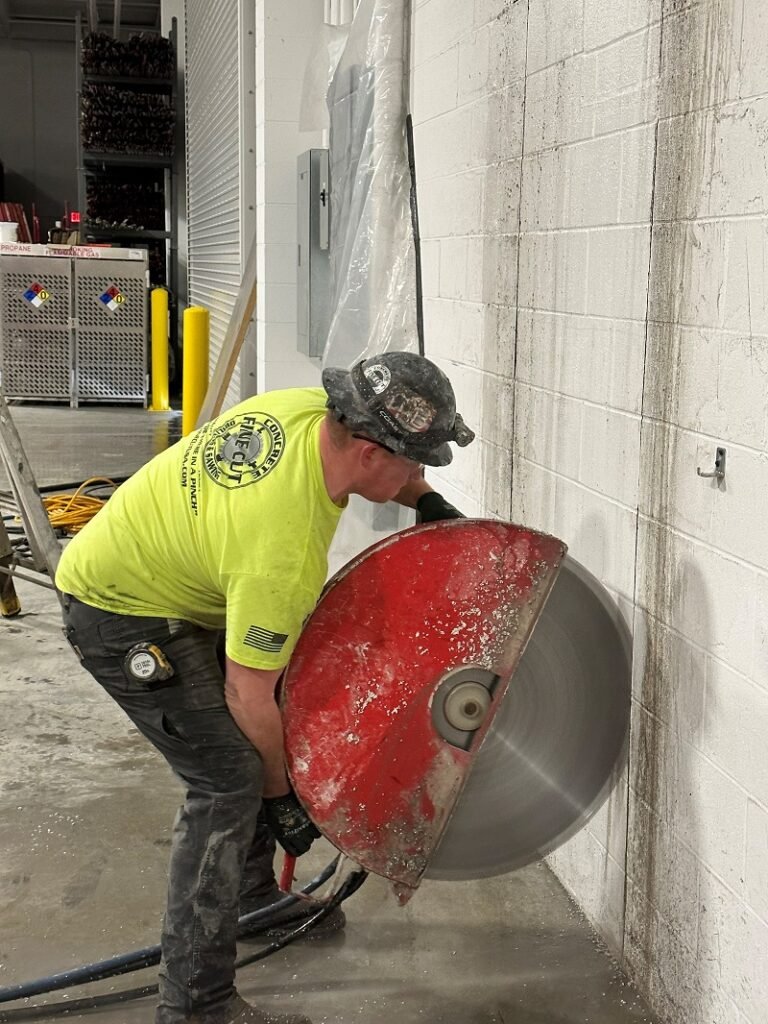
Ring sawing uses a continuous ring-shaped diamond blade and is generally performed with handheld equipment. It can provide relatively deep cuts while remaining more maneuverable than some larger cutting systems. This makes ring sawing useful in locations where equipment access is restricted.
Ring sawing may be used for:
- Wall openings
- Door and window openings
- Concrete blocks
- Localized demolition
- Small structural modifications
- Confined construction areas
For renovation projects in occupied buildings or restricted areas, equipment size and access can be important considerations when selecting a cutting method. However, the suitability of ring sawing depends on the concrete thickness, reinforcement, required depth, and site conditions.
7. Hand Sawing
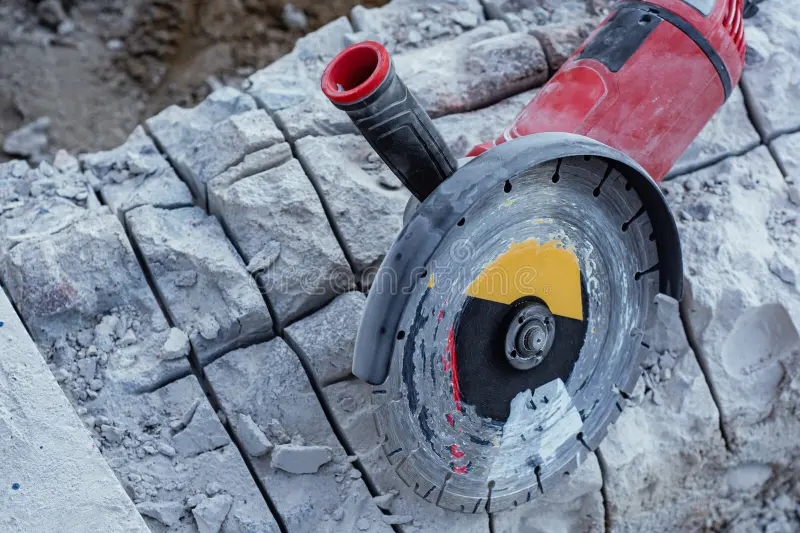
Hand sawing is a flexible option for smaller concrete cutting tasks. Handheld diamond saws can be transported easily and are useful where larger equipment cannot be positioned. It is often selected for localized cutting and smaller renovation jobs.
Common applications include:
- Small wall openings
- Concrete blocks
- Minor slab cutting
- Localized repairs
- Small renovation projects
- Areas with limited equipment access
Hand sawing can be practical for relatively small jobs, but it is not automatically the best choice for deep or heavily reinforced concrete. Larger equipment may be required when greater cutting depth or accuracy is needed.
How to Select the Right Concrete Cutting Method in Dubai
Selecting the right technique requires more than choosing the most powerful machine. Contractors should evaluate the structure and working conditions before starting the job.
Concrete Thickness
The thickness of the concrete is one of the first factors to consider. A thin floor section may require a completely different setup from a thick reinforced wall or foundation.
Reinforcement
Reinforced concrete contains steel bars or mesh. The reinforcement arrangement can affect cutting performance and equipment selection. For complex structural work, contractors should understand the reinforcement layout before cutting.
Cutting Depth
Some projects require a shallow controlled cut, while others require a full-depth cut through a concrete section. The required depth influences the choice of blade, saw, and cutting technique.
Type of Opening
The shape and size of the required opening also matter.
For example:
- Circular opening: Core drilling
- Long straight floor cut: Floor sawing
- Large wall opening: Wall sawing
- Very thick concrete: Wire sawing
- Road or pavement cut: Road sawing
Using the appropriate method can improve accuracy and make the overall operation more efficient.
Site Access
Dubai construction sites can range from large open developments to occupied villas, apartments, commercial buildings, and restricted indoor areas. The available working space can determine whether a large track-mounted machine or a more compact handheld tool is appropriate.
Existing Utilities
Before cutting or drilling, contractors should consider concealed services such as electrical cables, water pipes, drainage lines, HVAC systems, and other embedded components. Where necessary, concrete scanning can help identify potential hazards before cutting begins.
Why Diamond Cutting Is Preferred for Concrete
Diamond cutting technology is widely used for professional concrete work because concrete can be highly abrasive and reinforced concrete may contain steel. Diamond blades, core bits, and wire systems are designed for different cutting applications. Selecting the correct diamond tooling depends on the concrete type, aggregate, reinforcement, cutting depth, and equipment being used.
The objective is not simply to cut the concrete but to achieve the required result efficiently and with appropriate control.
Benefits of Professional Concrete Cutting in Dubai
Professional cutting offers several advantages for construction, renovation, and demolition projects.
Precise Results
Specialized cutting equipment can create controlled lines and accurately sized openings.
Reduced Unnecessary Damage
Controlled cutting can help limit unwanted cracking and vibration compared with uncontrolled breaking, particularly when the correct technique is used.
Efficient Work
The appropriate equipment can significantly improve productivity, especially when cutting large quantities of concrete.
Suitable for Reinforced Structures
Diamond cutting systems can be used for many reinforced concrete applications when the correct blade, equipment, and cutting procedure are selected.
Cleaner Openings
Accurate cutting can produce cleaner edges, which can make subsequent construction, installation, or removal work easier.
Concrete Cutting for Dubai Construction and Renovation Projects
Concrete modification is common across many types of projects in Dubai.
Residential Projects
Villa renovations and extensions may require slab cutting, wall openings, core drilling, or concrete removal for new services.
Commercial Buildings
Offices, shops, restaurants, and commercial properties may require concrete cutting during fit-out and renovation work.
High-Rise Buildings
High-rise projects can involve complex MEP penetrations, core drilling, structural modifications, and controlled concrete removal.
Infrastructure Projects
Roads, pavements, drainage systems, and utility installations may require road sawing and other cutting techniques.
Industrial Facilities
Warehouses and industrial facilities can require slab cutting, core drilling, floor modifications, and heavy concrete removal.
Safety and Planning for Concrete Cutting in Dubai
Concrete cutting should be treated as a planned construction activity rather than simply operating a cutting machine. Dubai Municipality provides building regulations, construction safety guidance, and other requirements relating to construction activities in the emirate. Its published Dubai Building Code focuses on minimum requirements for building health, safety, welfare, and environmental considerations.
Dubai Municipality also maintains construction safety guidance and has emphasized compliance with safety requirements at construction sites across Dubai. Before starting concrete cutting work, contractors should consider:
- Site assessment
- Structural requirements
- Hidden utilities
- Reinforcement and embedded systems
- Appropriate PPE
- Dust and water control
- Equipment selection
- Safe access and work areas
- Controlled removal of cut sections
For structural modifications, the work should be coordinated with the appropriate engineer or project professional where required.
Concrete Cutting vs. Concrete Breaking
Concrete cutting and concrete breaking are two different approaches.
Concrete cutting uses saws, diamond blades, core drills, or wire systems to create controlled cuts and openings.
Concrete breaking uses impact equipment to fracture concrete into smaller pieces for removal.
For projects requiring a specific opening or clean cutting line, cutting is generally more appropriate. For bulk demolition and removal, breaking may be used after the concrete has been strategically cut. In many Dubai construction and renovation projects, both techniques may be combined depending on the scope of work.
Final Thoughts about Concrete Cutting Methods
The right Concrete Cutting Methods can make construction, renovation, and demolition work more controlled and efficient. Wall sawing, floor sawing, core drilling, wire sawing, road sawing, ring sawing, and hand sawing each have different applications. The best method depends on the concrete thickness, reinforcement, cutting depth, opening size, location, access, and project requirements.
For projects in Dubai, proper planning is particularly important when modifying existing buildings, roads, slabs, walls, and reinforced structures. A professional assessment can help determine which cutting technique and equipment are suitable for the job.
Whether the requirement is slab cutting, wall cutting, core drilling, road cutting, diamond cutting, or controlled concrete removal in Dubai, selecting the correct method from the beginning can help achieve a more accurate and efficient result.