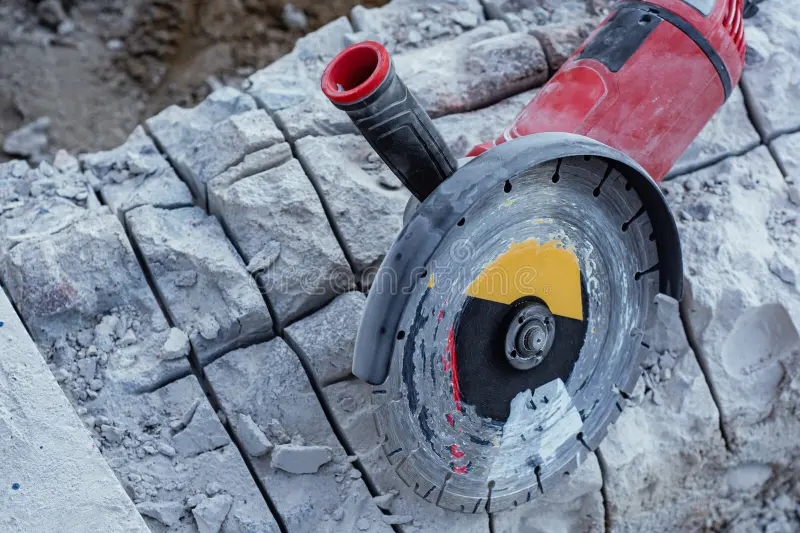
If you’ve spent any time around a construction site in Dubai, you’ve probably heard the sharp whine of a diamond blade cutting through concrete before you’ve seen it. It’s one of those sounds that’s become part of the city’s background noise, right along with the cranes and the traffic. But most people who hear it have no idea how much precision — and how much technology — actually goes into that cut.
Diamond concrete cutting isn’t just “sawing through concrete with a fancier blade.” It’s a specialized process that’s reshaped how contractors handle everything from small residential renovations to major infrastructure projects. In this post, we’ll walk through what diamond concrete cutting actually is, the main methods used, why it’s become the industry standard, and where you’ll see it applied across Dubai’s construction landscape.
What Is Diamond Concrete Cutting?
At its core (no pun intended), diamond concrete cutting uses blades or wires embedded with industrial-grade diamond segments to cut through concrete, reinforced concrete, and masonry. The diamonds aren’t decorative — they’re one of the hardest materials on earth, which is exactly what you need to cut through something as dense and abrasive as concrete without the blade wearing down after five minutes.
Traditional cutting tools, like standard abrasive saws, tend to struggle with concrete. They generate excessive heat, wear out quickly, and often leave rough, uneven edges. Diamond blades solve most of these problems. They cut cleaner, last longer, and can handle reinforced concrete — meaning concrete with steel rebar inside it — without much extra effort.
This matters a lot in a city like Dubai, where a huge share of construction involves reinforced concrete structures: high-rises, parking structures, villas, retail developments, and infrastructure projects. If your cutting method can’t handle rebar cleanly, it’s not going to hold up on most Dubai job sites.
The Main Methods of Diamond Concrete Cutting
Diamond cutting isn’t a single technique — it’s a family of methods, each suited to different jobs. Here are the ones you’ll come across most often.
Wall Sawing
Wall sawing uses a diamond blade mounted on a track system that runs vertically or horizontally along a wall. It’s the go-to method for cutting openings for doors, windows, and structural modifications. Because the saw is track-guided, the cuts come out straight and precise — which matters a lot when you’re creating an opening that has to line up with a frame or fit a specific structural requirement.
Slab Sawing (Floor Sawing)
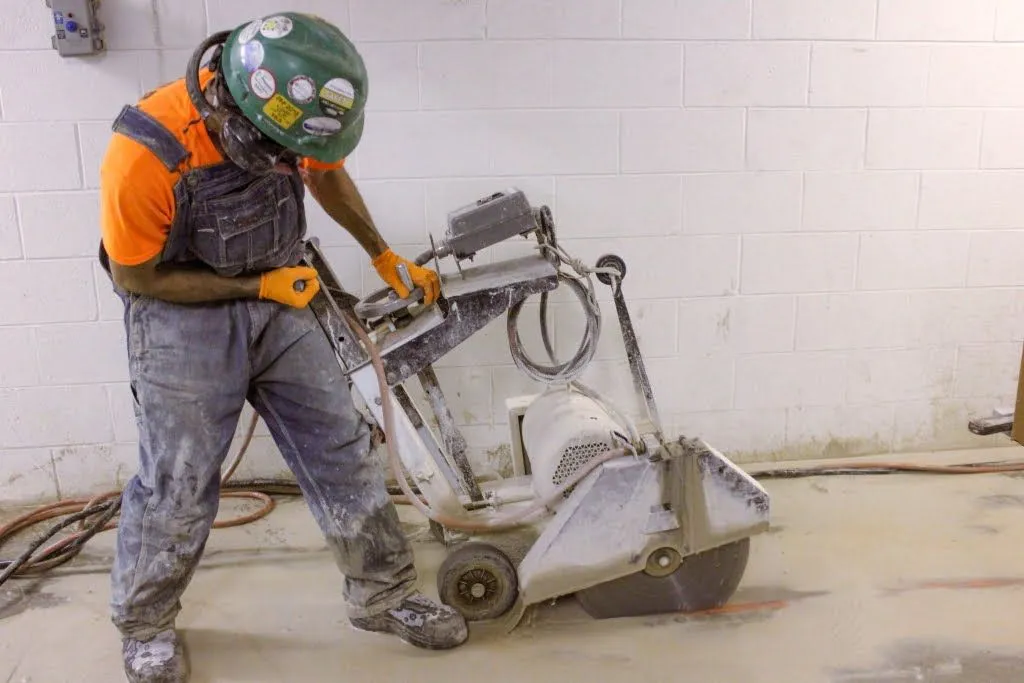
This is exactly what it sounds like — cutting horizontal slabs, usually floors, using a walk-behind or ride-on diamond saw. It’s commonly used for expansion joints, removing sections of flooring, or creating access points for underground utilities. Slab sawing is one of the more common jobs on any active construction or renovation site.
Core Drilling
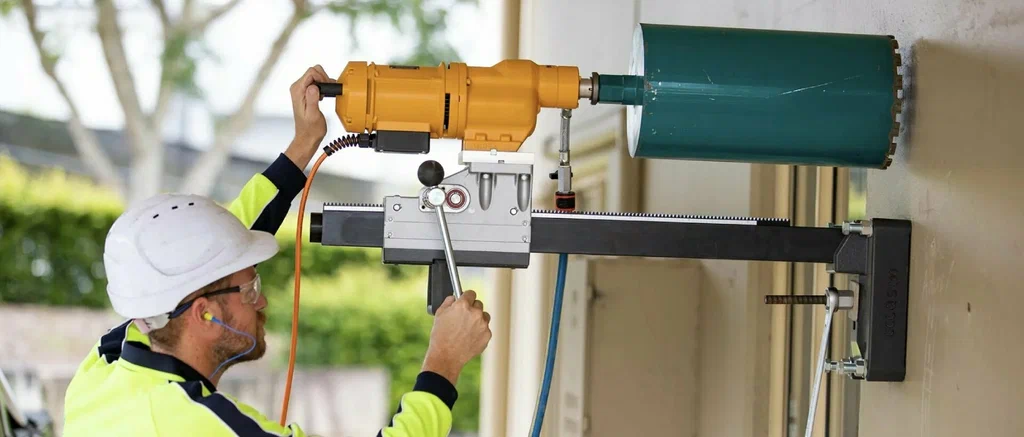
Core drilling uses a rotating, hollow diamond bit to cut round holes through concrete or masonry. It’s the standard method for creating penetrations for plumbing, electrical conduit, HVAC ducts, and anchor bolts. If you’ve ever wondered how pipes get routed cleanly through a concrete floor without cracking the whole slab, this is how.
Wire Sawing
Wire sawing is used for the heavy-duty jobs — thick, heavily reinforced sections, large structural columns, or elevator shafts where other tools simply can’t reach or aren’t strong enough. It works by looping a diamond-embedded cable around the section and driving it with a hydraulic motor, slicing through the concrete gradually and under full control.
Hand Sawing
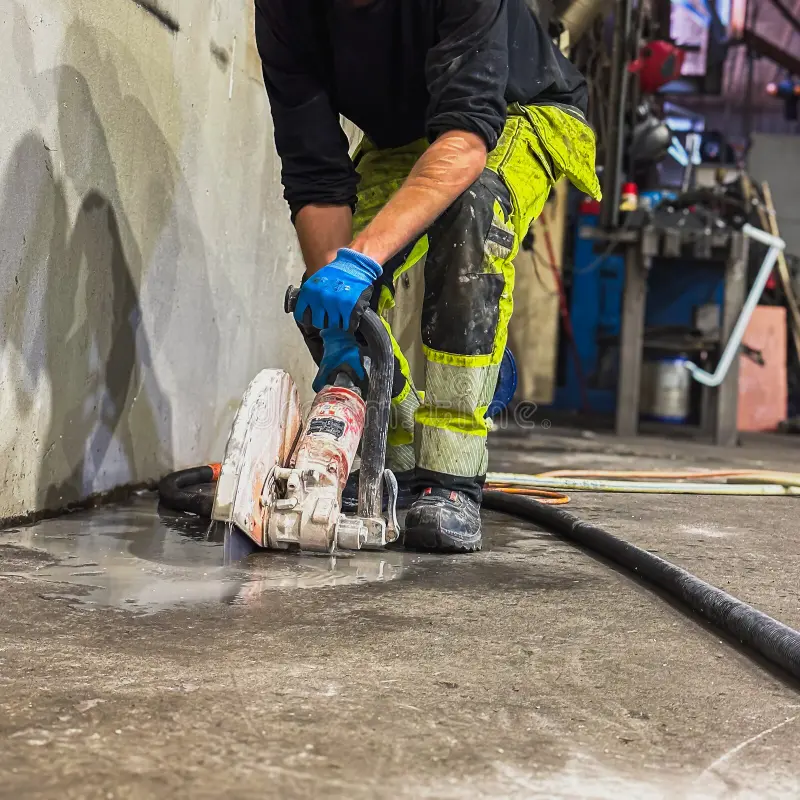
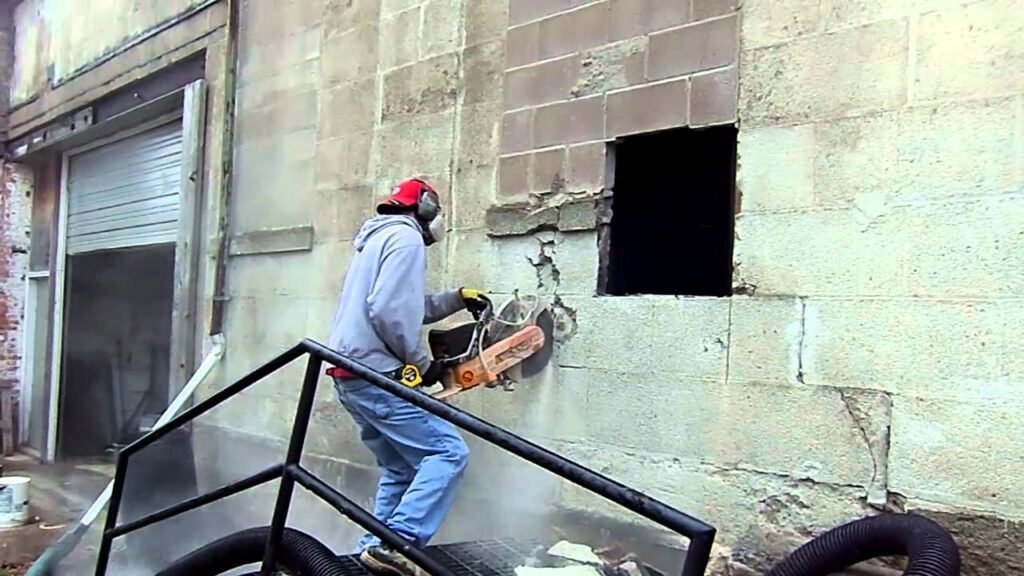
For smaller, more localized cuts — patch repairs, small openings, or touch-up work — handheld diamond saws are often the most practical choice. They’re less powerful than track-mounted systems but far more maneuverable in tight spaces.
Why Diamond Blades Outperform Traditional Cutting Tools
It comes down to a mix of durability, precision, and safety.
Diamond blades stay sharp far longer than standard abrasive blades, which means fewer blade changes and less downtime on-site. They also generate cleaner cuts with minimal chipping or cracking around the edges — something that matters both structurally and aesthetically, especially on finished surfaces.
There’s also the reinforced concrete factor we mentioned earlier. Standard blades tend to struggle or fail outright when they hit rebar. Diamond blades are built to cut through it without significant loss of performance, which is a big reason they’ve become the default choice on almost every serious construction site.
And then there’s dust and vibration control. Modern diamond cutting is almost always done wet — meaning water is fed to the blade during cutting — which suppresses dust significantly and keeps the blade cooler, extending its life even further. For anyone doing indoor cutting in an occupied building, that dust suppression isn’t a nice-to-have. It’s often a requirement.
Key Benefits of Diamond Concrete Cutting
- Precision — clean, accurate cuts with minimal collateral damage to surrounding concrete
- Speed — faster cutting than traditional methods, which translates directly into shorter project timelines
- Versatility — the same core technology adapts to walls, floors, columns, and structural elements
- Reduced structural stress — cleaner cuts put less strain on the surrounding structure compared to jackhammering or breaking
- Better safety — controlled, methodical cutting reduces the risk of unexpected structural failure mid-job
- Lower dust and noise — wet-cutting methods make diamond cutting far more suitable for occupied or sensitive environments
Applications Across Dubai’s Construction Industry
Dubai’s construction sector is unusual in how much variety it demands from contractors. On any given week, a diamond cutting crew might move between a high-rise renovation, a villa extension, and an industrial warehouse fit-out — and each of those jobs calls for a slightly different approach.
Residential projects often need diamond cutting for renovations — creating new door openings, running plumbing or electrical lines through existing slabs, or modifying layouts in villas and apartments.
Commercial and retail fit-outs frequently require precise cutting for MEP (mechanical, electrical, plumbing) installations, especially in buildings that are being reconfigured for a new tenant.
High-rise and tower construction relies heavily on wire sawing and core drilling for structural modifications, elevator shaft work, and utility penetrations through heavily reinforced concrete.
Industrial and infrastructure projects — think warehouses, parking structures, and utility work — often need larger-scale slab sawing, road cutting, and demolition-adjacent cutting work.
Given how fast Dubai’s skyline and infrastructure continue to expand, demand for skilled diamond cutting contractors isn’t slowing down anytime soon.
What to Look for in a Diamond Concrete Cutting Contractor
Not all cutting crews are equal, and the difference shows up fast once work begins. A few things worth checking before hiring anyone for diamond concrete cutting in Dubai:
- Do they scan the concrete (using GPR or similar technology) before cutting, to avoid hitting rebar, conduit, or post-tension cables?
- Do they use wet-cutting methods to control dust, especially for indoor work?
- Are their operators trained and experienced across multiple cutting methods — not just one?
- Can they provide references or examples of similar past work?
- Are they licensed and insured to work on your type of project?
A contractor who skips the scanning step, in particular, is taking a real risk with your structure — and potentially with live utilities running through it.
Final Thoughts
Diamond concrete cutting has become the standard for a reason. It’s precise, efficient, and capable of handling the reinforced concrete that dominates modern construction — all while keeping dust, noise, and structural stress to a minimum. Whether it’s a small residential opening or a full structural modification on a high-rise, the method matters as much as the crew doing the work.
If you’re planning a project in Dubai that involves concrete cutting, core drilling, or demolition-adjacent work, it’s worth talking to a contractor who understands not just how to cut concrete, but how to do it safely, cleanly, and with the right equipment for your specific job.