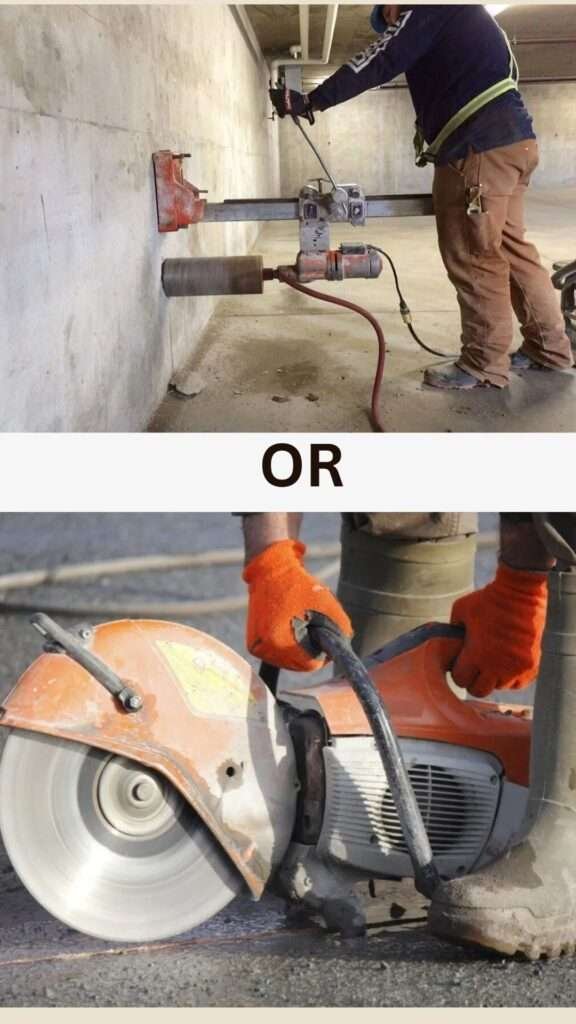
If you are planning any kind of construction or renovation work in Dubai, you have probably come across two terms that sound similar but mean very different things: core drilling and wall sawing. Both are concrete cutting methods. Both use diamond tools. And both are used to cut through hard materials like concrete, brick, and stone. But they are not the same job, and using the wrong one can cost you time, money, and a lot of headache.
In this article, we will break down core drilling vs wall sawing in simple words, explain when to use each one, and help you figure out exactly what your project needs. Whether you are a contractor, a builder, or a homeowner trying to understand a quote from a concrete cutting company, this guide is for you.
What Is Core Drilling?
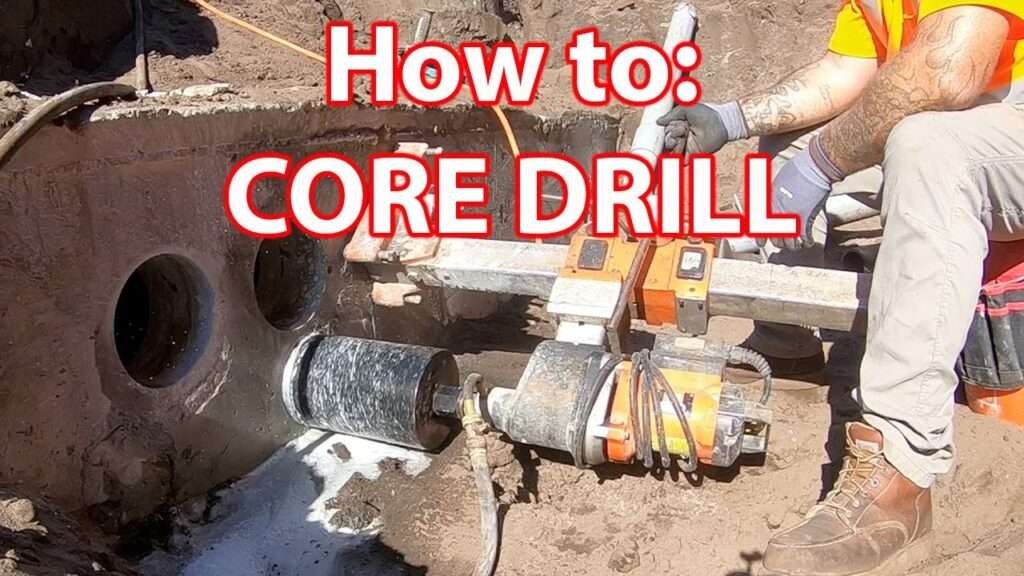
Core drilling is a method used to cut round, clean holes into concrete, walls, floors, or slabs. Think of it like using a giant drill bit, except instead of drilling into wood, it is cutting into solid concrete or stone.
A machine with a hollow diamond-tipped bit spins at high speed and slowly bores into the material. As it drills, it removes a solid cylinder of material called a “core.” This is where the name comes from.
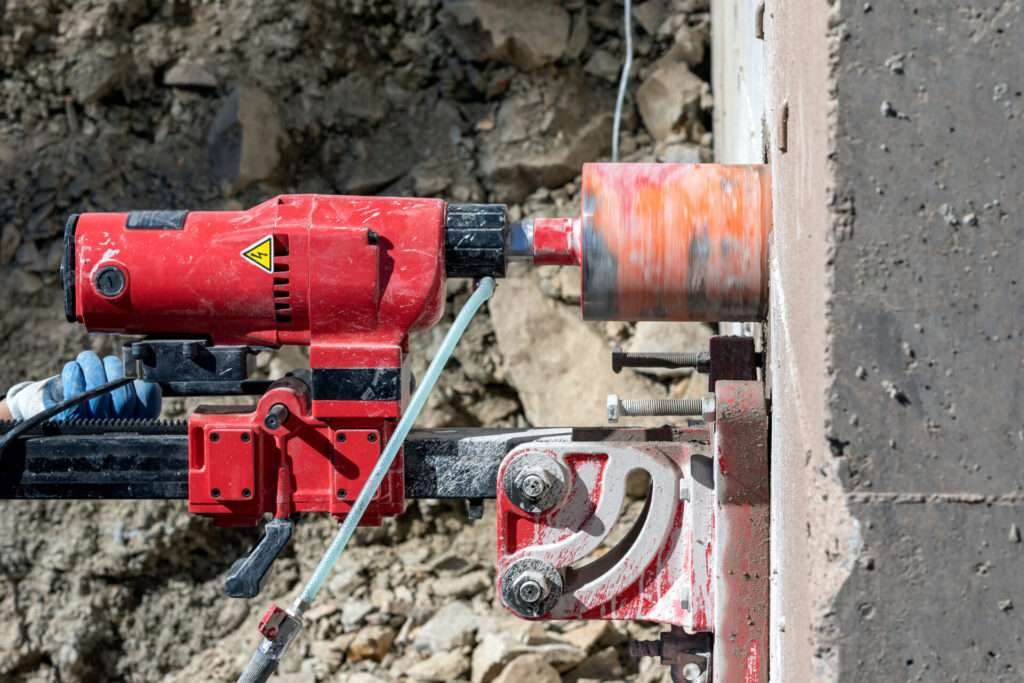
Core drilling is commonly used for:
- Making holes for pipes, cables, and ducts
- Installing plumbing or electrical lines through walls or floors
- HVAC (air conditioning) vent holes
- Anchor bolt holes
- Soil or concrete sampling for testing
The holes made through core drilling can be small, like a few centimeters wide, or quite large, sometimes over a meter, depending on the equipment used.
What Is Wall Sawing?
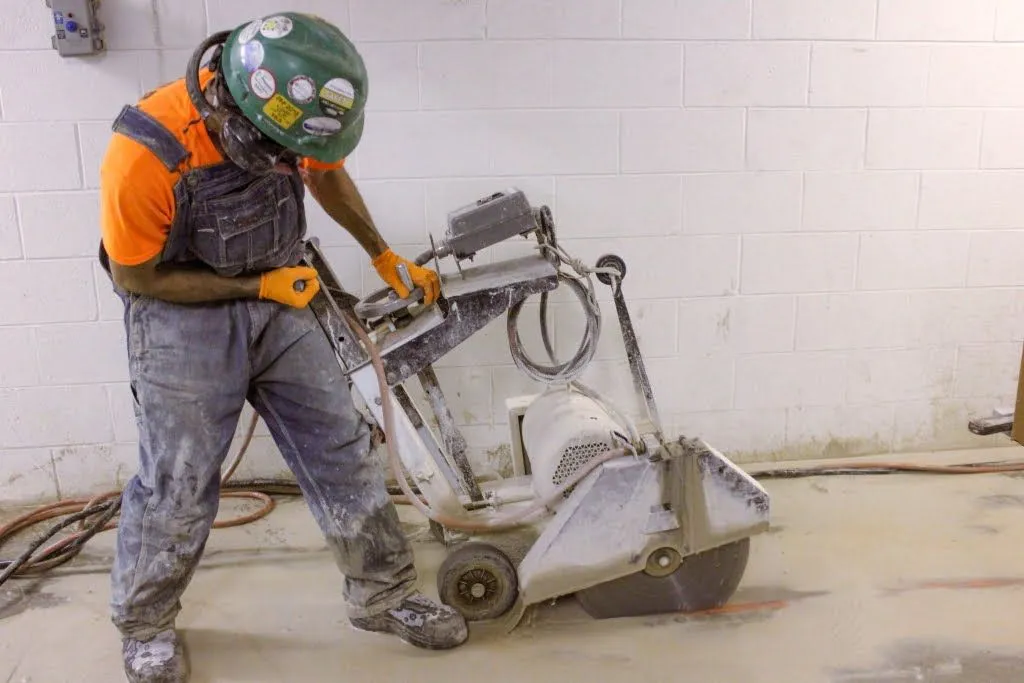
Wall sawing, on the other hand, is used to make straight, flat cuts through walls, floors, or slabs. Instead of drilling a round hole, a wall saw uses a large circular diamond blade mounted on a track system. The saw moves along the track, cutting a clean, straight line through the concrete.
Wall sawing is typically used for:
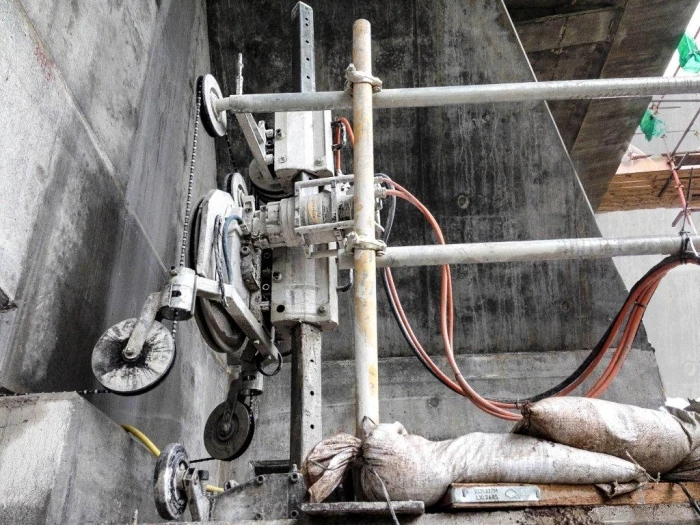
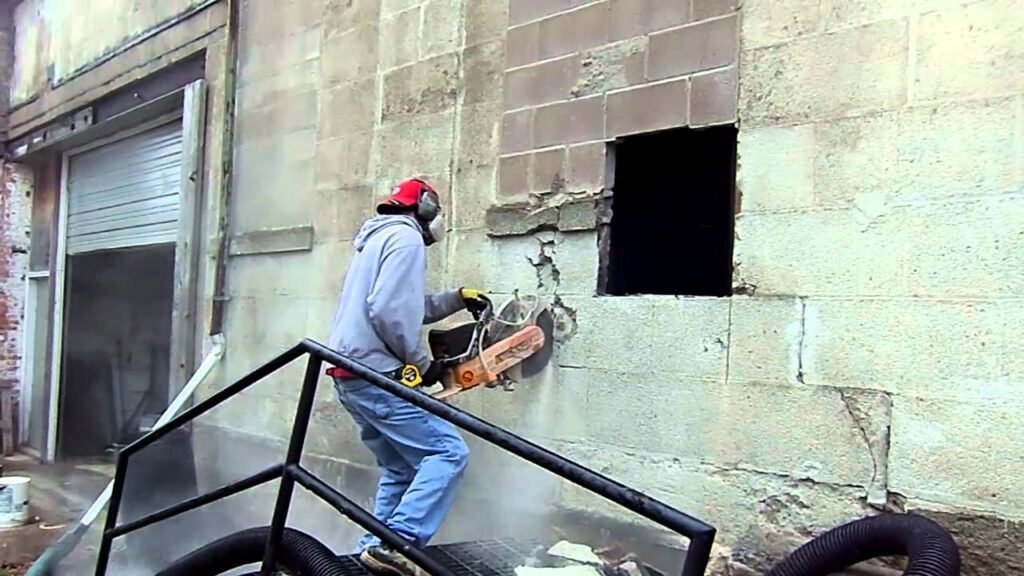
- Cutting openings for doors and windows
- Making space for new staircases
- Cutting through load-bearing or non-load-bearing walls
- Removing sections of concrete for renovation
- Creating openings for elevators or shafts
Because wall saws are mounted on a track, they give very precise, straight cuts, even through thick concrete walls. This makes wall sawing the go-to choice when you need clean, structural openings rather than round holes.
Core Drilling vs Wall Sawing: The Main Differences
Now let’s compare them side by side so the difference between core drilling and wall sawing is crystal clear. The shape of the cut is the biggest difference. Core drilling makes round holes. Wall sawing makes straight lines and openings.
The purpose is different too. Core drilling is mostly used for utility work, things like pipes, cables, and vents. Wall sawing is used for structural openings, like doors, windows, and walls being removed. The equipment is different. Core drilling uses a rotating hollow bit. Wall sawing uses a circular blade on a track system.
The size of the job matters as well. Core drilling is usually smaller and quicker, done hole by hole. Wall sawing is often a bigger job, cutting long straight lines through thick walls or slabs. Precision needs also differ. Core drilling gives precise round holes of exact diameter. Wall sawing gives precise straight cuts with very little vibration or damage to nearby areas.
When to Use Core Drilling
You should choose core drilling when your project needs round penetrations rather than open sections. Some common situations include: If you are installing new plumbing lines through a concrete floor or wall, core drilling is the right choice. If your HVAC contractor needs vent holes through slabs for ducting, core drilling makes clean, dust-controlled holes. If electricians need to run cables through thick walls, core drilling gets it done without damaging the surrounding structure. If you need to test the strength of existing concrete, core drilling pulls out a sample for lab testing.
If you are installing anchor bolts or fixtures that need a round base, core drilling gives you the exact size you need. Core drilling is especially useful in Dubai’s many high-rise buildings and villas, where MEP (mechanical, electrical, plumbing) work often requires clean holes through concrete slabs without disturbing rebar or nearby structures.
When to Use Wall Sawing
Wall sawing is the better option when your project involves creating or removing large sections of a wall or slab. Here are situations where wall sawing makes more sense: If you are adding a new door or window opening to an existing wall, wall sawing gives you a straight, accurate cut. If you are removing a section of wall for a renovation or extension, wall sawing handles it cleanly and safely. If you are creating a new staircase opening in a concrete floor, wall sawing is used because it can cut through thick horizontal slabs with precision.
If your project needs an elevator shaft or large structural opening, wall sawing is often required because of the size and straight lines involved. If you are working on a demolition project and need to remove specific wall sections without damaging what stays behind, wall sawing offers much more control than sledgehammers or jackhammers.
In Dubai, wall sawing is often used in commercial renovations, retail fit-outs, and villa extensions where property owners want clean, dust-free cuts without cracking the surrounding structure.
Core Drilling vs Concrete Sawing: Is That the Same as Wall Sawing?
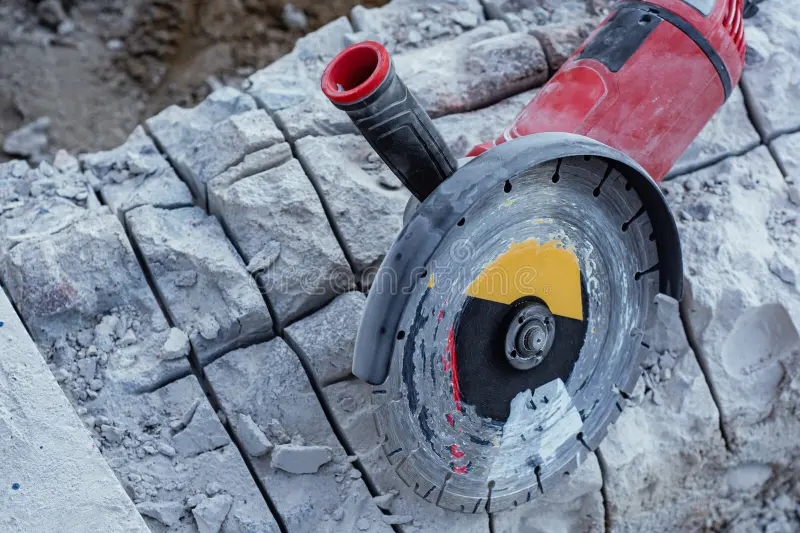
A lot of people search for core drilling vs concrete sawing and get confused, thinking wall sawing and concrete sawing are the same thing. Here is the simple explanation. Concrete sawing is actually a broader term. It covers several types of cutting methods, including wall sawing, floor sawing, and even road or slab cutting. Wall sawing is one type of concrete sawing, specifically for vertical or overhead wall cuts.
So when you are comparing core drilling vs concrete sawing, you are really comparing round hole cutting (core drilling) against straight line cutting methods in general (which includes wall sawing, floor sawing, and slab cutting). Wall sawing is simply the most common concrete sawing method used for wall openings.
Why This Matters for Your Project in Dubai
Dubai’s construction and renovation industry moves fast, and getting the right cutting method for your project saves both time and money. Using the wrong method can lead to unnecessary structural damage, extra repair costs, and project delays.
For example, trying to use a hand saw or jackhammer to create a door opening instead of proper wall sawing can crack surrounding concrete and weaken the wall. On the other hand, trying to drill a large round hole using a hand drill instead of proper core drilling equipment can take hours and still leave a rough, uneven result.
This is why most professional contractors in Dubai rely on specialized concrete cutting companies that offer both core drilling and wall sawing services, so the right tool is used for the right job every time.
How to Choose Between Core Drilling and Wall Sawing
If you are still unsure which method fits your project, ask yourself these questions: Do you need a round hole for a pipe, cable, or vent? Choose core drilling. Do you need a straight opening for a door, window, or wall removal? Choose wall sawing. Is the job about testing or sampling concrete? Choose core drilling.
Is the job about renovation, extension, or structural changes? Choose wall sawing. If your project involves both, for example, a full renovation that needs new door openings plus new plumbing holes, a good concrete cutting company will offer both services and can handle the entire job.
Final Thoughts about core drilling vs wall sawing
Understanding the difference between core drilling and wall sawing helps you plan your project better, get accurate quotes, and avoid costly mistakes. Core drilling is your go-to method for round holes, whether for pipes, cables, or testing. Wall sawing is the right choice for straight cuts, openings, and structural changes.
If you are working on a project in Dubai and need core drilling, wall sawing, or any other concrete cutting service, working with an experienced team makes all the difference. The right equipment and the right technique keep your project on schedule and your structure safe.
FAQs about core drilling vs wall sawing
1. What is the main difference between core drilling vs wall sawing?
The main difference between core drilling vs wall sawing is Core drilling makes round holes using a rotating diamond bit, while wall sawing makes straight cuts using a circular blade mounted on a track system.
2. Can core drilling be used on walls?
Yes, core drilling can be used on walls, floors, and slabs. It is commonly used to create round holes through walls for pipes, cables, or ducts.
3. Is wall sawing noisy or messy?
Modern wall sawing uses water-cooled diamond blades, which control dust and reduce noise compared to older methods like jackhammering.
4. Which is more expensive, core drilling or wall sawing?
Costs depend on the size and complexity of the job. Core drilling is usually priced per hole and its diameter, while wall sawing is priced based on the length and thickness of the cut.
5. Do I need a professional company for core drilling and wall sawing in Dubai?
Yes. Both methods require specialized diamond cutting equipment and trained operators to avoid damaging structural elements like rebar or load-bearing walls.
6. Can wall sawing be used to cut through floors too?
Wall sawing is mainly for vertical wall cuts, but a similar method called floor sawing uses the same principle for horizontal slabs and floors.
7. How do I know if my wall is load-bearing before cutting?
A professional concrete cutting company will usually do a structural assessment or concrete scanning before cutting to check for rebar and confirm whether the wall is load-bearing.