
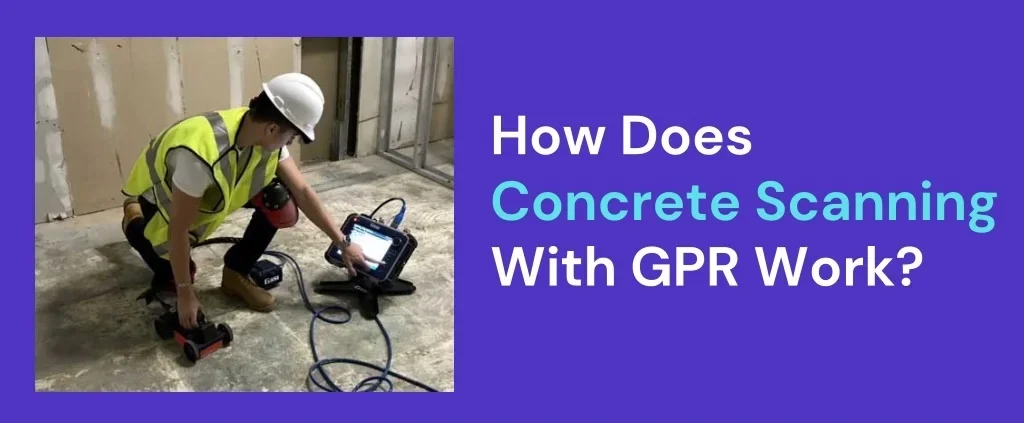
If you’re planning any drilling or cutting work in a building, there’s one question you should always ask first: what is concrete scanning, and do I need it?
A lot of property owners, contractors, and site managers in Dubai skip this step. They think it’s an extra cost that isn’t really necessary. Then something goes wrong — a drill hits a hidden electrical cable, or cuts through a post-tension cable in a slab — and suddenly a small job turns into an expensive, dangerous problem.
In this article, we’ll explain concrete scanning in plain simple words. No confusing engineering terms. Just what it is, how it works, why it matters, and why so many contractors in Dubai now ask for it before starting any concrete work.
What Is Concrete Scanning?
Concrete scanning is a way of looking inside a concrete slab, wall, or column before you drill, cut, or break into it. Think of it like an X-ray for concrete. You can’t see through concrete with your eyes, but a scanner can show you what’s hidden inside it.
Concrete floors and walls are rarely just plain concrete. Inside them, you’ll often find:
- Steel rebar (the metal bars that give concrete its strength)
- Electrical conduits and wiring
- Post-tension cables (steel cables under tension that hold the structure together)
- Plumbing pipes
- Empty ducts or voids
If you drill or cut without knowing where these things are, you’re basically working blind. Concrete scanning takes the guesswork out of it.
How Does Concrete Scanning Work? (GPR Explained Simply)
Most concrete scanning today is done using a method called GPR, which stands for Ground Penetrating Radar. It sounds technical, but the idea behind it is simple.
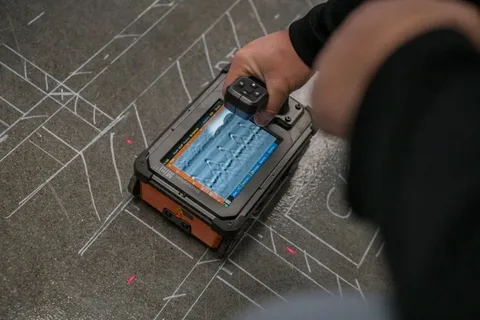
Here’s how concrete scanning GPR works, step by step:
- A technician moves a small scanning device across the surface of the concrete, like moving a metal detector over sand.
- The device sends radar waves into the concrete.
- When those waves hit something inside — like a steel bar, a cable, or a pipe — they bounce back to the device.
- The device reads how the waves bounced back and builds a picture of what’s hidden underneath, and roughly how deep it is.
That’s the whole idea. No drilling, no damage, no digging. Ground penetrating radar concrete scanning gives you a live picture of what’s inside the slab, right there on site, in real time.
Compared to older methods (like X-ray scanning, which needs the area to be cleared out for safety reasons), GPR scanning Dubai contractors use today is faster, safer, and doesn’t need any special site shutdown. That’s a big reason it has become the standard method for concrete scanning across construction sites, malls, hospitals, and residential towers in the city.
Why Concrete Scanning Matters
You might be wondering — is this really necessary? Can’t a skilled worker just be careful?
Here’s the honest answer: no amount of “being careful” can replace actually knowing what’s inside the concrete. That’s why concrete scanning matters so much on any job that involves drilling or cutting.
Let’s break down the real reasons:
1. It Protects the Structure
Post-tension cables are common in Dubai buildings, especially in high-rise towers and parking structures. These cables are under massive tension. If a drill or saw cuts through one by accident, it can cause a sudden, violent release of energy. This isn’t just a repair problem — it can be genuinely dangerous for anyone nearby, and it can weaken the whole structural section.
2. It Protects People
Cutting through a live electrical cable while drilling can cause electric shock, fire, or an outage that affects an entire floor or building. Concrete scanning before drilling lets the crew mark out safe zones so nobody gets hurt.
3. It Saves Money
Hitting a hidden pipe or cable doesn’t just stop work for the day. It can mean emergency repairs, damaged equipment, delayed project timelines, and sometimes legal or insurance headaches. A scan that takes an hour can save days of cleanup and thousands of dirhams in unplanned repair costs.
4. It Keeps Projects on Schedule
When you know exactly where it’s safe to drill, your team can work with confidence instead of pausing every few minutes to double-check. This actually speeds up the job overall.
5. It’s Often Required by Building Management
Many buildings, malls, and towers in Dubai now require a concrete scanning report before allowing any coring or drilling work, especially in shared structures like parking basements or shopping centers. Without it, contractors may not even be allowed to start.
Concrete Scanning Before Drilling: What Actually Happens On Site
If you’ve never seen a scan happen, here’s what a typical concrete scanning before drilling job looks like on a Dubai site:
- The area is marked out. The technician looks at the drilling or cutting plan and identifies the exact zone that needs to be checked.
- The surface is cleaned. Dust, debris, and loose material are cleared so the scanner can get an accurate reading.
- The scan is done. The GPR device is passed slowly and carefully over the marked area, sometimes in a grid pattern for accuracy.
- Findings are marked directly on the concrete. Using chalk or marker, the technician draws lines and symbols showing where rebar, cables, pipes, or other objects are hiding, and roughly how deep they sit.
- A report is given if needed. For larger jobs, a written report with scan images may be provided for the client’s records or for building management.
- Drilling or cutting begins in the cleared zones. Now the crew knows exactly where it’s safe to work, and where to avoid.
The whole process is usually quick. A small residential job might take less than an hour. Larger commercial areas take longer, but it’s still much faster than dealing with damage after the fact.
Where Is Concrete Scanning Used?
You might think this is only for big construction sites, but concrete scanning is used in all kinds of projects across Dubai, including:
- Residential villas and apartments (before installing railings, shelves, or new plumbing)
- Commercial fit-outs and office renovations
- Hospitals and clinics (where safety margins are extremely tight)
- Shopping malls (before signage, storefront changes, or utility work)
- Parking structures (because of post-tension cables in the slabs)
- New construction (checking existing slabs before extending or modifying them)
Basically, if you’re about to drill, cut, or core into any existing concrete structure, a scan is worth doing first — no matter how big or small the job is.
Concrete Scanning vs. Just “Being Careful”
Some people ask why they should pay for scanning when a worker can simply drill slowly and stop if something feels wrong. The problem is, by the time you feel resistance from a hidden object, it’s often too late — the cable or pipe may already be damaged. Steel rebar and cables don’t announce themselves before contact. Concrete scanning finds them before the drill bit ever touches the surface, which is the entire point.
Why Choose a Professional Concrete Scanning Team in Dubai
Not all scanning is equal. The accuracy of a scan depends heavily on the skill of the technician reading the results and the quality of the equipment used. A rushed or poorly done scan can miss things, which defeats the whole purpose.
When choosing a team for GPR scanning Dubai projects, look for:
- Experience working on similar buildings or structures
- Modern GPR equipment that’s properly maintained
- Clear on-site marking, not just a report you get later
- Willingness to explain findings in plain language
- A track record of working with contractors, building management, and consultants across Dubai
At FK Technical Services, What Is Concrete Scanning, concrete scanning is something we do regularly alongside our core cutting, core drilling, and diamond cutting work. Because we handle the cutting and drilling ourselves, we understand exactly what to look for during a scan, and how to read the results in a way that actually helps the crew doing the job.
Final Thoughts
So, what is concrete scanning? In simple terms, it’s a safety check that shows you what’s hiding inside concrete before you drill or cut into it. It uses ground penetrating radar to “see” through the slab without damaging it, spotting rebar, cables, pipes, and post-tension lines that would otherwise be invisible.
It’s a small step that protects people, protects the structure, and protects your budget. For any drilling, coring, or cutting job in Dubai, skipping this step is a risk that’s simply not worth taking.
Frequently Asked Questions
1. What is concrete scanning used for?
It’s used to find out what’s hidden inside a concrete slab, wall, or column — like steel bars, cables, pipes, or post-tension lines — before drilling, cutting, or coring into it.
2. How does GPR scanning work?
GPR (Ground Penetrating Radar) sends radar waves into the concrete. When the waves hit something solid inside, they bounce back, and the device uses that information to build a picture of what’s underneath the surface.
3. Is concrete scanning necessary for small jobs, like drilling a hole for a shelf?
Yes, especially in buildings with post-tension slabs or where electrical wiring runs through walls and floors. Even small drilling jobs can hit something dangerous if the area isn’t checked first.
4. How long does a concrete scan take?
It depends on the size of the area. A small residential spot can take under an hour, while larger commercial areas may take a few hours to scan thoroughly.
5. Can concrete scanning detect everything inside a slab?
GPR is very effective at detecting rebar, cables, conduits, and voids. However, results can depend on the thickness of the concrete, the depth of objects, and the quality of the equipment and technician doing the scan.
6. Does concrete scanning damage the structure?
No. It’s a completely non-invasive method. Nothing is drilled, cut, or removed during the scanning process itself.
7. Who typically requires a concrete scan before work begins?
Building management, facility teams, contractors, and consultants often require a scan before allowing any coring or drilling, especially in shared or commercial buildings like malls, offices, and parking structures.
8. Where can I get concrete scanning done in Dubai?
FK Technical Services offers concrete scanning across Dubai, along with core cutting, core drilling, and diamond cutting services, for residential, commercial, and industrial projects.
Pingback: How Is Diamond Concrete Cutting Done? | FK Technical