Diamond cutting blades for concrete are steel discs with tiny industrial diamonds on the edge that grind through concrete, block, and even steel bars, and choosing the right type, size, and cutting method decides how fast, clean, and safe your cut will be. This guide explains how these blades work, the main types, how to pick one, what a 14 inch blade is used for, how block blades are different, wet and dry cutting, safety rules, and when to call a professional team in Dubai. You will also find answers to common questions at the end.
If you have ever watched a crew cut a clean doorway in a concrete wall, you have seen these blades at work. A normal metal blade would wear out in seconds on concrete. Diamond cutting blades for concrete stay sharp because diamond is the hardest material we know. At FK Technical Service, we use diamond tools every day for cutting, coring, and demolition across Dubai, so we know what makes a good cut. Read on to learn the basics in simple words.
What Are Diamond Cutting Blades for Concrete?
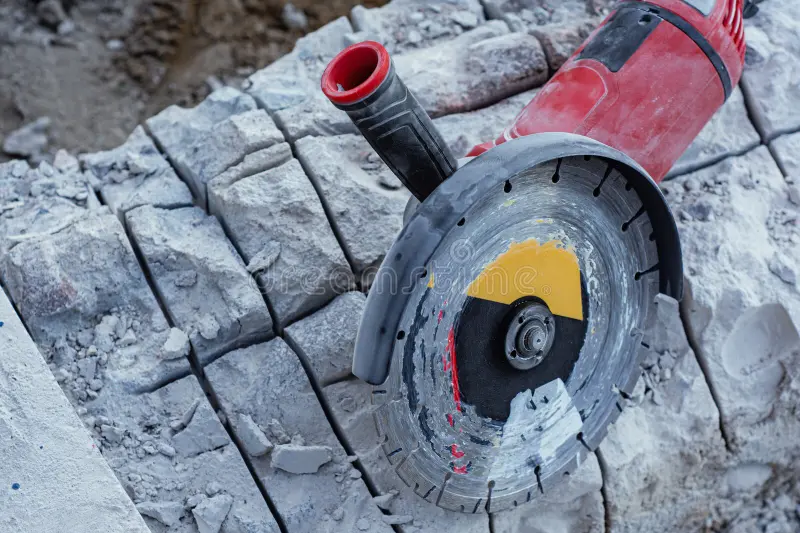
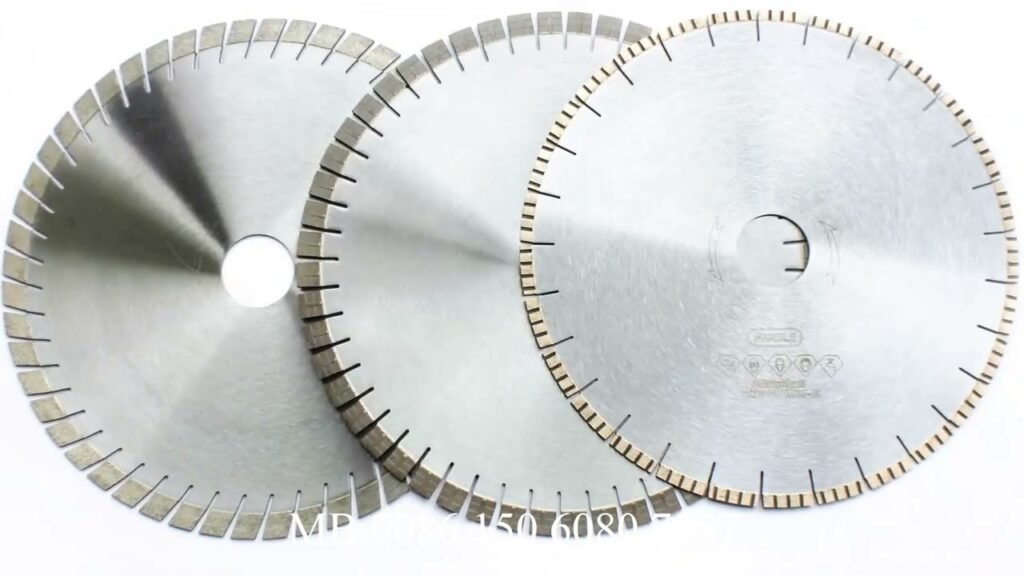
Diamond cutting blades for concrete, A diamond blade is a round steel disc. Around the edge are small blocks, called segments, that hold tiny pieces of industrial diamond. These diamonds are not jewelry. They are small, hard grains that are mixed into a metal base and fixed to the blade.
Here is how it works. The blade spins very fast. The diamonds grind away a thin line in the concrete. As the metal around the diamonds slowly wears away, new diamonds come out, so the blade keeps cutting. This is called the self-sharpening effect.
These blades are used on:
- Concrete walls, floors, and slabs
- Reinforced concrete with steel bars inside
- Concrete blocks and bricks
- Pavers, kerbs, and roads
- Stone and tiles (with the right blade type)
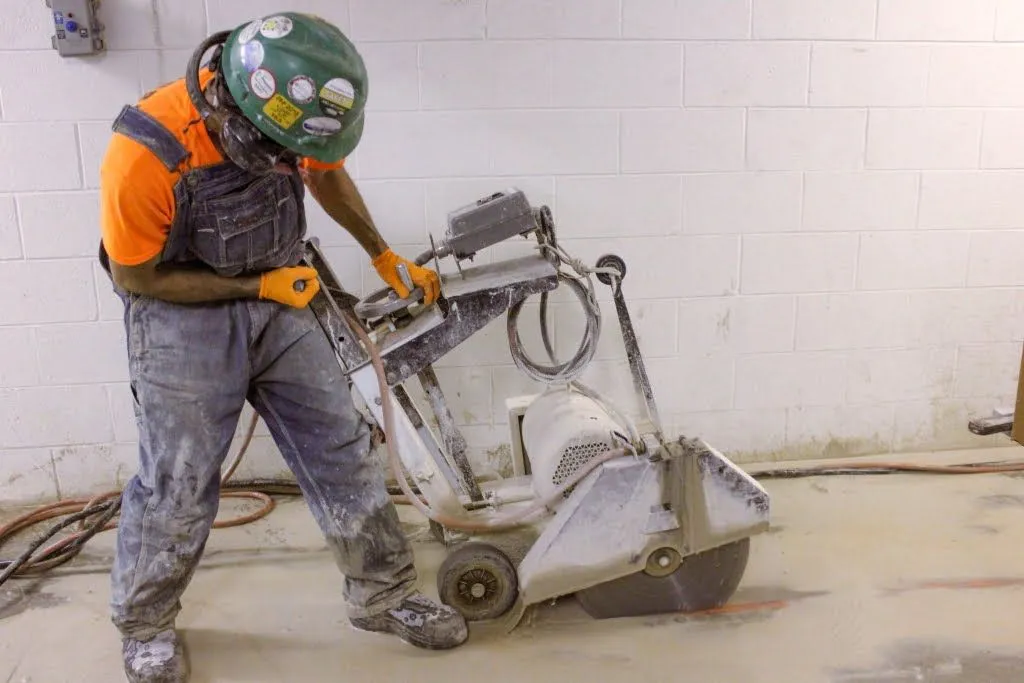
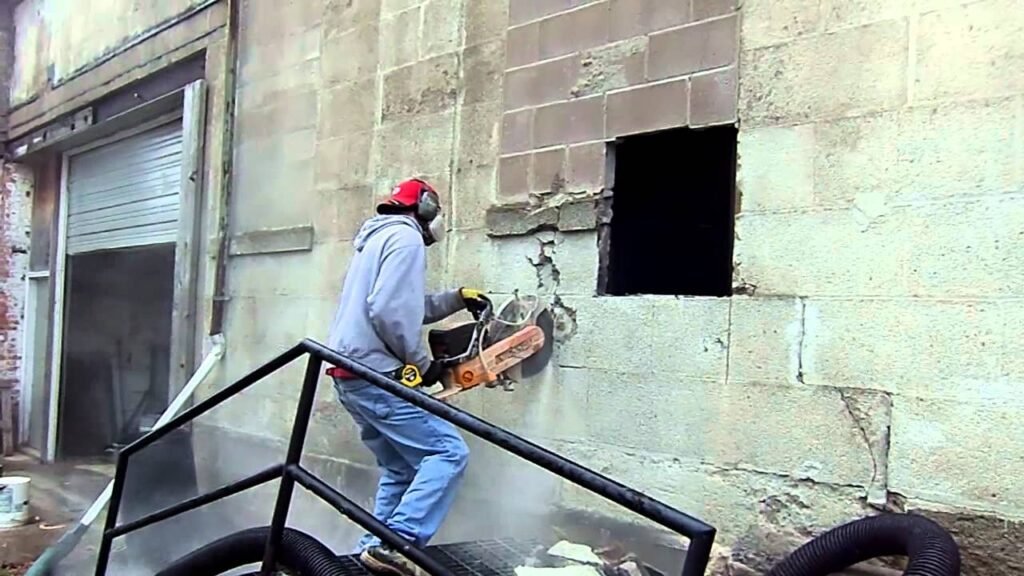
The blades fit on many machines, such as hand-held cut-off saws, wall saws, floor saws, and some wire and ring systems. The machine and the blade must match each other, which we explain below.
Diamond Blades for Concrete: Wet vs Dry Cutting
One of the first choices is whether the blade is made for wet or dry cutting. This choice affects safety, dust, and how long the blade lasts.
Wet Cutting Blades
Wet blades are used with a steady flow of water. The water cools the blade, keeps dust down, and washes away the cut material. Wet cutting is the best choice for most concrete work, especially indoors and in busy areas. It also helps blades last longer. In Dubai’s hot weather, cooling matters even more, because a hot blade wears faster.
Dry Cutting Blades
Dry blades are made to cut without water. They are used for short cuts and in places where water cannot be used. They get hot, make a lot of dust, and usually wear faster. Dry cutting needs strong dust control and breathing protection.
Which Is Better?
For deep, long, or indoor cuts, wet cutting is usually the better and safer choice. Dry cutting is better kept for small, quick jobs with proper dust control. Never use a blade that is made for wet cutting only without water, because it can overheat and become unsafe.
Types of Diamond Cutting Blades for Concrete
Different blade shapes are made for different jobs. Here are the main types.
Segmented Blades
These have gaps between the diamond segments. The gaps help cool the blade and clear away material. Segmented blades cut fast and are popular for concrete and masonry. The cut edge is a little rougher.
Continuous Rim Blades
These have a smooth rim with no gaps. They give very clean, chip-free cuts and are best for tiles, stone, and fine work. They are usually used with water and cut more slowly on thick concrete.
Turbo Blades
These have a rim with small waves or ridges. They cut faster than continuous blades and cleaner than segmented ones. They are a good all-round choice for general concrete and masonry.
Reinforced Concrete Blades
These are built with a stronger bond and special segments that can cut through steel bars inside concrete without wearing out too fast. They are common on professional building sites.
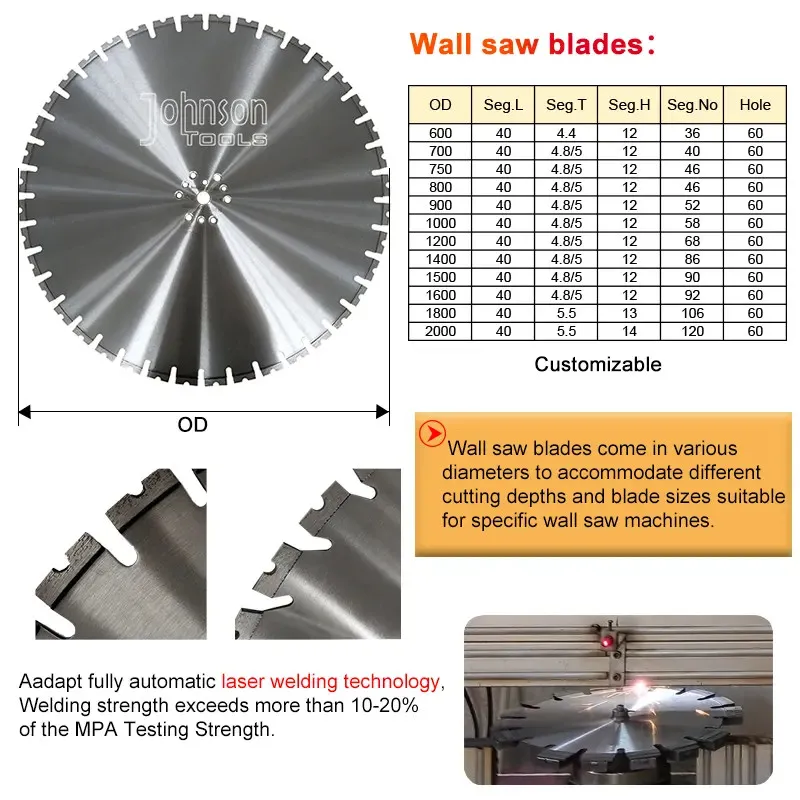
Floor Saw and Wall Saw Blades
Large machines use special blades designed for deep and long cuts in slabs and walls. These blades come in many sizes and are matched to the saw’s power and speed.
14 Inch Diamond Blade: What It Is Used For
The 14 inch diamond blade is one of the most common sizes on building sites. It measures about 350 mm across. It is the standard size for many hand-held petrol cut-off saws, and it is also used on some small floor saws.
Here is why this size is so popular:
- Good balance: It can cut a decent depth while the saw stays light enough to handle.
- Useful for many jobs: Short cuts in walls, slabs, kerbs, pipes, and blocks are easy with this size.
- Easy to find: Many suppliers stock it, and it fits many common machines.
- Quick work: For small to medium jobs, it is fast and handy.
But a 14 inch blade has limits. It cannot cut very deep. For thick walls, large beams, or deep slabs, bigger blades on wall saws or floor saws, or wire saws, are used instead. Always check the saw’s guide to make sure the blade size, speed rating, and center hole size match the machine. A wrong match is dangerous.
Concrete Block Cutting Blade: What Makes It Different
Diamond cutting blades for concrete, Concrete blocks are very common in Dubai for boundary walls, inner walls, and many villa builds. They are lighter and more abrasive than dense reinforced concrete. This changes the blade you need.
A good concrete block cutting blade usually has these features:
- Harder bond: Block and other abrasive materials wear down the blade metal quickly. A harder bond holds the diamonds longer.
- Fast-cutting segments: Block is easier to cut than reinforced concrete, so blades can be built for speed.
- Right size for the saw: Many block cuts use 14 inch blades on hand-held saws, or smaller blades for tight work.
- Water or dust control: Block dust is fine and harmful when breathed, so wet cutting or dust collectors are important.
A general rule is that abrasive materials, like block and fresh concrete, need a harder bond blade. Very hard, dense materials, like old concrete with hard stone inside, often need a softer bond blade so new diamonds can wear out and keep cutting. Always check the blade maker’s guide for your material.
How to Choose Diamond Cutting Blades for Concrete
Choosing the right blade saves time, money, and trouble. Use this simple checklist.
- Know your material. Is it reinforced concrete, plain concrete, block, brick, or stone?
- Match the machine. Check the saw’s blade size, speed rating, and center hole (arbor) size. The blade must be rated for at least the saw’s top speed.
- Pick wet or dry. Choose a blade made for the way you will cut.
- Choose the bond. Harder bond for abrasive materials, softer bond for very hard materials.
- Check the segment height. Taller segments give more cutting life.
- Think about the cut. Fast and rough, or slow and clean? Segmented, turbo, or continuous rim?
- Look at quality. A cheap blade may lose segments or wear out fast, which wastes money and can be unsafe.
- Ask the supplier. A good seller can match the blade to your saw and job.
If you are not sure, ask a professional cutting team to do the work. They already have the right tools and know how to use them.
Safety Rules for Using Diamond Cutting Blades for Concrete
Spinning blades are dangerous if they are used the wrong way. Here are the key safety rules.
- Wear the right gear: Safety glasses or a face shield, ear protection, gloves, safety shoes, and a dust mask or respirator.
- Check the blade before every use: Look for cracks, missing segments, or a bent disc. Do not use a damaged blade.
- Match blade and machine: Use only blades rated for the saw’s speed and size.
- Fit the blade correctly: Tighten it properly and check the direction arrow.
- Use water where possible: It cools the blade and reduces harmful dust.
- Scan before cutting: Check for hidden pipes, cables, and steel.
- Keep guards in place: Never remove the safety guard.
- Hold the saw firmly and stay clear of the cutting line: Kickback can happen if the blade binds.
- Do not force the blade: Let the diamonds do the work.
- Keep bystanders away: Block off the area and keep others at a safe distance.
- Switch off and let the blade stop: Never put a saw down while the blade is still spinning.
Concrete dust can harm your lungs over time, so dust control is not optional. Always cut wet or use proper dust collection.
How to Make Diamond cutting blades for concrete Last Longer
Good blades cost money, so it makes sense to care for them. These tips help:
- Use the right blade for the job. The wrong blade wears out fast.
- Use enough water. Heat is the biggest enemy of a blade.
- Do not push too hard. Steady pressure works better than force.
- Keep the cut straight. Twisting the blade can crack it.
- Let the blade cool. Do not leave it hot and wet in a closed box.
- Dress a glazed blade. When the surface becomes smooth and stops cutting well, cutting a soft abrasive material, like a block or an abrasive pad, can open the diamonds again.
- Store blades flat or hanging. Keep them dry and away from impacts.
- Replace worn blades. When the segments are very low, stop using the blade.
When to Hire Professionals Instead
Diamond cutting blades for concrete, Having the right blade is only part of a safe cut. A team also needs scanning tools, the right saw, a plan, and training. Hire a professional team when:
- The concrete is thick or has a lot of steel
- You are cutting in a tower, shared building, or finished home
- The wall or floor may carry weight
- You need clean doorways, stairs, or large openings
- You are not sure what is hidden inside the concrete
- You need dust, noise, and water properly controlled
A trained team uses the right blades, machines, and safety steps, which protects both your building and the people around it.
Why Choose FK Technical Service?
At FK Technical Service, we focus on safe, neat, and on-time work for homes, offices, shops, and industrial sites across Dubai. We use professional diamond tools, wall saws, floor saws, and core drills, choose the right method for each job, protect your property, keep dust and water under control, and clean up when we finish.
Visit fktechnicalservicesdubai.com to tell us about your project and ask for a clear quote.
Frequently Asked Questions (FAQs)
How long do diamond cutting blades for concrete last?
It depends on the blade quality, the material, the amount of steel inside, how much water is used, and how the blade is handled. Reinforced and very hard concrete wear blades faster than block. A good blade used with water and the right technique lasts much longer.
Can I use a 14 inch diamond blade on any saw?
No. The blade must match the saw’s size, speed rating, and center hole. Using the wrong blade can be dangerous. Always check the saw’s manual and the blade label.
Can diamond blades cut steel bars in concrete?
Many can, especially blades made for reinforced concrete. But cutting steel wears the blade faster, so blades made for it are the better choice.
What is the difference between a block blade and a concrete blade?
A block blade is usually made with a harder bond for abrasive, softer materials, and is built for speed. A concrete blade, especially for reinforced concrete, is built for harder, denser material and may have a different bond and segment design.
Is wet cutting always better?
For most concrete work, yes. Water cools the blade, controls dust, and helps the blade last. Dry cutting is only for short jobs with strong dust control and the right dry blade.
Why is my blade not cutting well?
The most common reasons are the wrong blade for the material, a glazed surface, worn segments, low water, or too much pressure. Check each one, and replace the blade if the segments are low.
Is it safe to cut concrete myself?
Small cuts on simple walls can be done by trained people with the right gear. But for thick concrete, hidden pipes, tall buildings, or load-bearing walls, we recommend hiring a professional team.
Does FK Technical Service cut concrete for customers?
Yes. We offer concrete cutting, core drilling, and demolition services across Dubai. Contact us for a site visit and a clear written quote.
Final Thoughts
A good cut starts with a good blade. When you understand the types, the sizes, and the difference between wet and dry cutting, you can make smarter choices and stay safer on the job. Match the blade to the material and the machine, use water, protect yourself, and ask for help when the job is too big or too risky. When you choose diamond cutting blades for concrete wisely, the work goes faster, cleaner, and with less waste. If you need a trained team in Dubai, contact FK Technical Service and let us handle the heavy work.